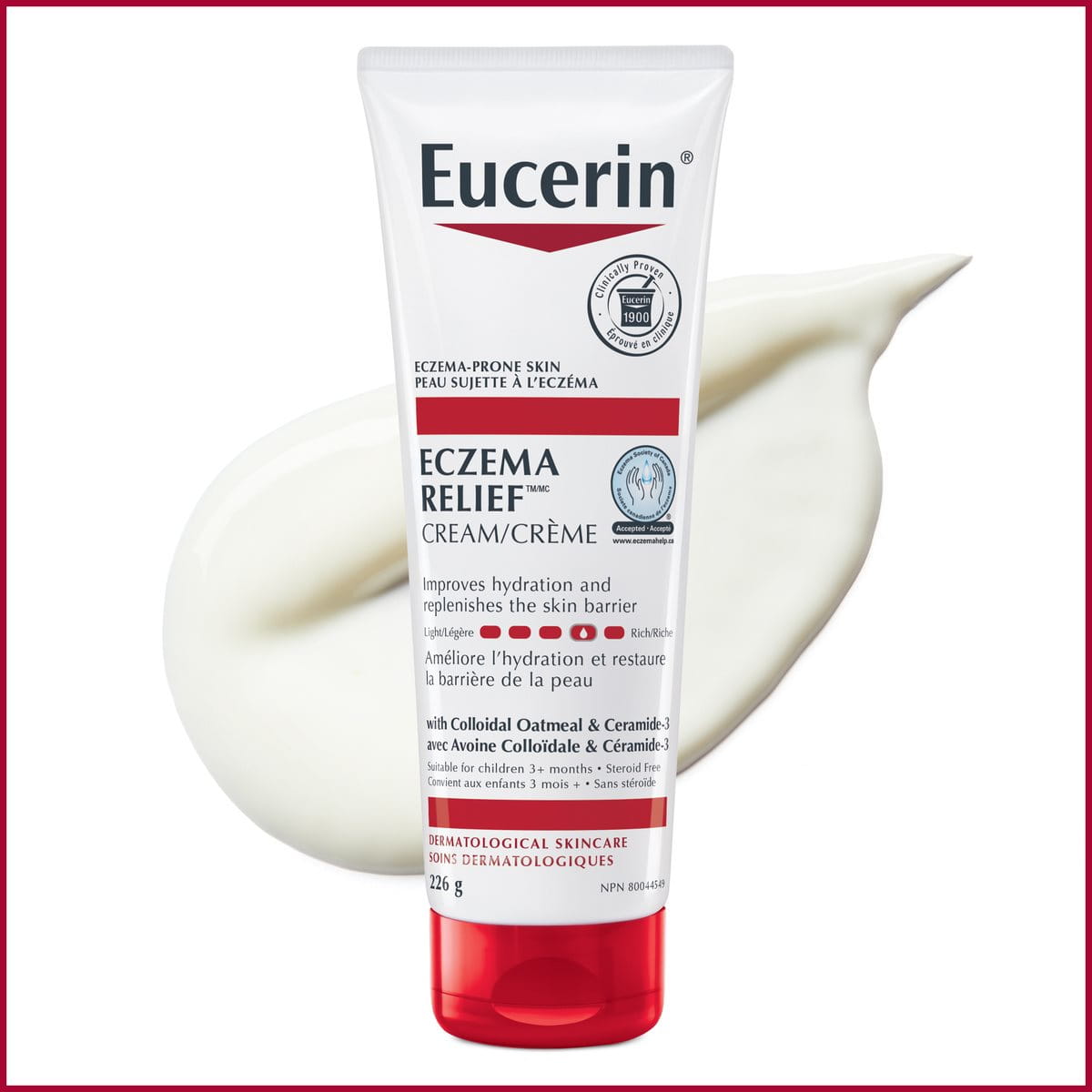

Protecting your skin from the sun’s harmful rays is important year-round, but when it comes to deciding on which sunscreen to use, the choices can feel overwhelming. Learn what factors to consider when choosing a sunscreen, and how to find the best sunscreen for your skin’s unique needs.
Choosing the right SPF
Sunscreens come in varying levels of protection marked by their SPF number. Learn what SPF stands for and what the different SPF numbers mean below.
What is SPF?
SPF stands for sun protection factor. SPF (Sun Protection Factor) indicates how well a sunscreen protects your skin from UVB rays, with a higher SPF number blocking a larger percentage of the sun’s UV rays. Regardless of the SPF number, sunscreen should be reapplied at least every 2 hours and used as directed.
What SPF level is right for you?
Knowing which SPF you should use is dependent on a number of factors, including your skin type, intensity of sunlight, and the amount of sunscreen you use.
What do different SPF numbers mean?
The SPF is a relative measure of the protection provided by a sunscreen to prevent sunburn.
While there is no SPF number that can stop 100% of the sun’s harmful UV rays, here are some of the most popular SPF choices and the associated amount of protection each offers:
- SPF 15 stops around 93% of UVB rays
- SPF 30 stops around 97% of UVB rays
- SPF 50 stops around 98% of UVB rays1
Is SPF 50 vs. 100 a big difference?
Even though the SPF number doubles from 50 to 100, the protection increases marginally. The difference in protection between SPF 50 and SPF 100 is minor (helping to stop 98% vs. 99% of the sun’s UVB rays, respectively2), so SPF 100 will protect your skin slightly better than SPF 50.
However, to maximize the effectiveness of your sunscreen, it’s important to be aware of the amount you use and how often you reapply. Applying too little sunscreen or uneven coverage will not provide you with the full effectiveness of the SPF. Failure to reapply sunscreen throughout the day will also leave you vulnerable to the sun.
Is SPF 15 enough?
While using any sunscreen is better than nothing, it is not recommended to use a sunscreen below SPF 15. The Canadian Dermatology Association (CDA) recommends7 using a minimum of SPF 303.
Do I still need a high SPF if I have dark skin?
There is a common misconception that the higher concentration of melanin (which produces skin pigment) in people with darker skin protects them from sun damage. Science shows that people of color can get sunburned, have pigment changes, and get skin cancer, and that skin cancer is often diagnosed later in people of color when it’s harder to treat4.
No matter the color of your skin, all skin needs broad-spectrum sun protection.
Mineral vs. chemical sunscreen – what’s the difference?
Mineral sunscreen, also known as physical sunscreen, creates a physical barrier on the skin’s surface and protects the skin by deflecting the sun’s UV rays. Chemical sunscreen layers onto the skin and helps to protect the skin by absorbing UV rays as opposed to deflecting them. Chemical sunscreen is the most popular form of sunscreen5.
Both mineral and chemical sunscreens are effective at protecting skin from the sun. Here are some unique qualities to each that may influence which you’d prefer for your skin’s needs:
Mineral Sunscreen:
- Often considered more suitable for sensitive skin. Mineral filters are also not very reactive and are less likely to cause discomfort.
Chemical Sunscreen:
- Easy to apply and blend – Chemical sunscreens often have a lighter formula that won’t leave a white film on the skin, as opposed to some thicker mineral sunscreens.
Choosing the best sunscreen for your skin type
Your skin is unique to you, so why use a generic sunscreen when it’s possible to choose a sunscreen that directly addresses your skin’s needs?
Whether you have skin showing signs of aging, acne-prone skin, or dry skin, Eucerin Sun has a specific formulation that provides broad-spectrum sun protection for all skin tones while addressing your specific skin type. All Eucerin sunscreens feature UVA/UVB sun protection plus an Advanced Antioxidant Complex, 5 Antioxidants Shield™, that goes beyond neutralizing to also guard from free radicals and help support skin health.
Sunscreen for sensitive skin
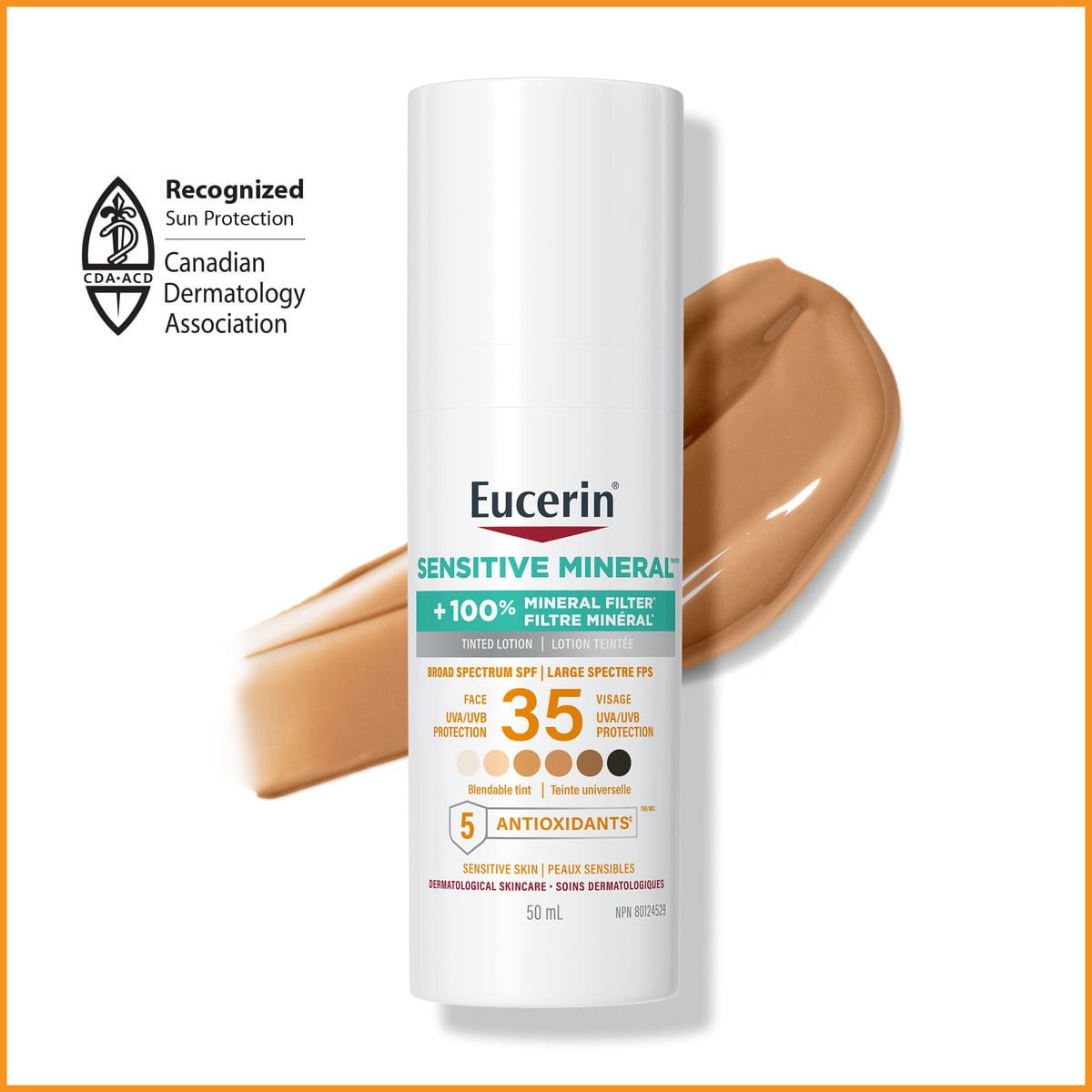
While all Eucerin® Sun sunscreens are appropriate for all skin types including sensitive skin, if you have particularly sensitive skin, you may want to consider a mineral sunscreen such as Eucerin® Sensitive Mineral SPF 35 Tinted Face Sunscreen Lotion. Formulated with 100% naturally sourced Zinc Oxide mineral filter*, this mineral sunscreen dries clear, leaving a matte finish and no visible residue.
Lightweight and non-comedogenic (won’t clog pores), this mineral sunscreen provides broad-spectrum SPF 50 UVA/UVB sun protection in a gentle formula with a blendable tint for all skin tones. Free of fragrance, dyes, parabens, PABA, phthalates, oxybenzone and octinoxate, this mineral sunscreen is suitable for daily use under makeup5.
*based on Zinc Oxide active
Face sunscreen for skin showing signs of aging
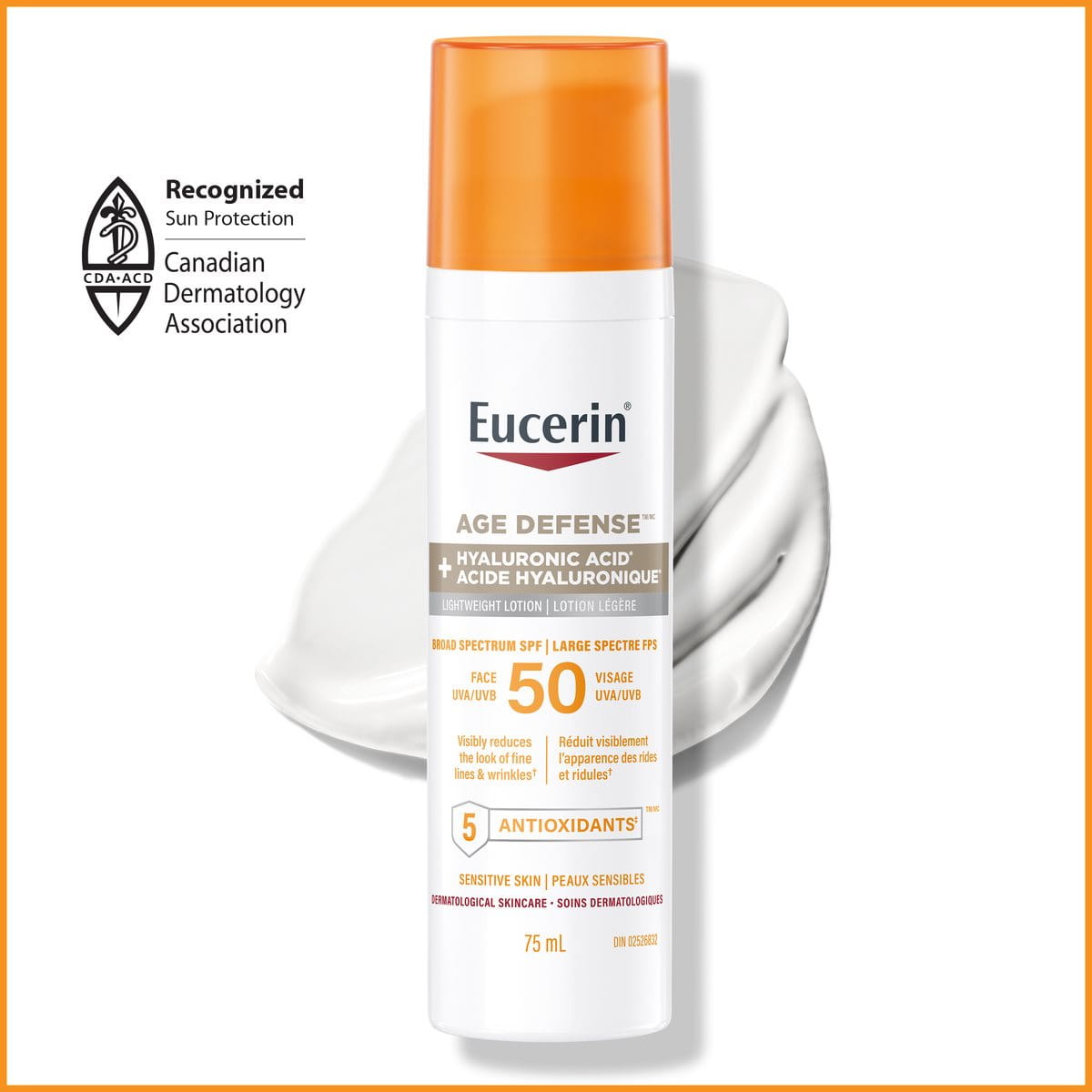
Exposure to the sun can cause premature signs of aging. Eucerin® Age Defense SPF 50 Face Sunscreen Lotion provides broad-spectrum SPF 50 sun protection in a Hyaluronic Acid-enriched formula that helps to visibly reduce the look of fine lines and wrinkles.*
*With continuous use after 1 week
This daily face sunscreen features UVA/UVB sun protection plus a unique Antioxidant Complex, 5 Antioxidants Shield™, that protects the skin against environmental aggressors that weaken the skin’s moisture barrier for healthier looking skin. Eucerin® Sun Age Defense SPF 50 Face Sunscreen is free of dyes, fragrances, parabens, PABA, phthalates, oxybenzone, and octinoxate.
Face sunscreen for oily skin
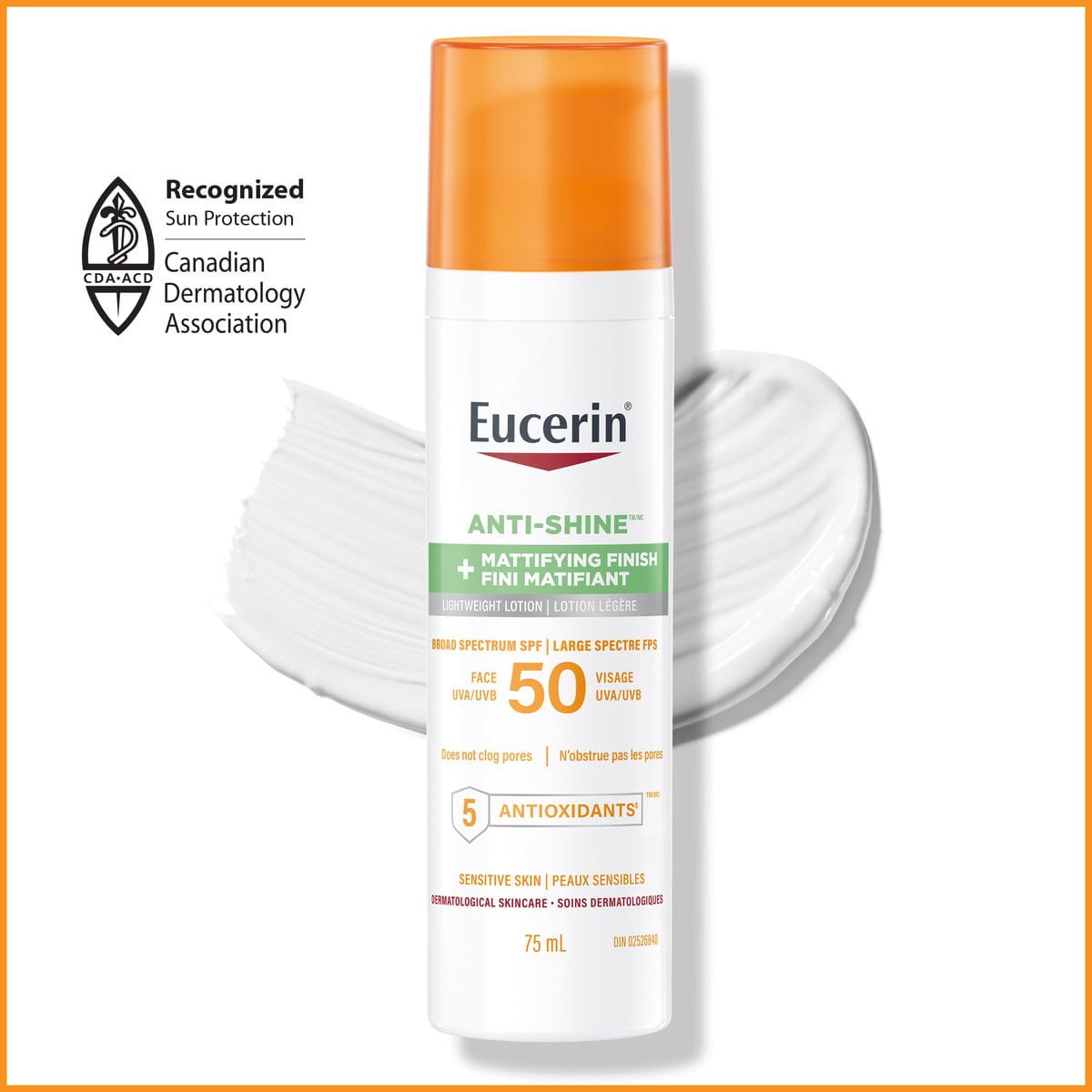
If you have oily, acne-prone skin, all Eucerin sunscreens, both chemical and mineral, are specially formulated to be non-comedogenic (won’t clog pores), but for oily skin, Eucerin® Anti-Shine SPF 50 Face Sunscreen Lotion provides broad spectrum SPF 50 UVA/UVB sun protection in a formula that leaves a dry touch and invisible finish.
Formulated for those with oily, acne-prone skin, this daily face sunscreen is formulated with 5 antioxidants and oil absorbing minerals and comes in a convenient premium pump dispenser. Easy to apply, easily spreadable and easy to blend in, this facial sunscreen dries clear, leaves a dry matte finish on the skin, and is suitable for daily use under makeup.
All-over sunscreen for all skin types and tones
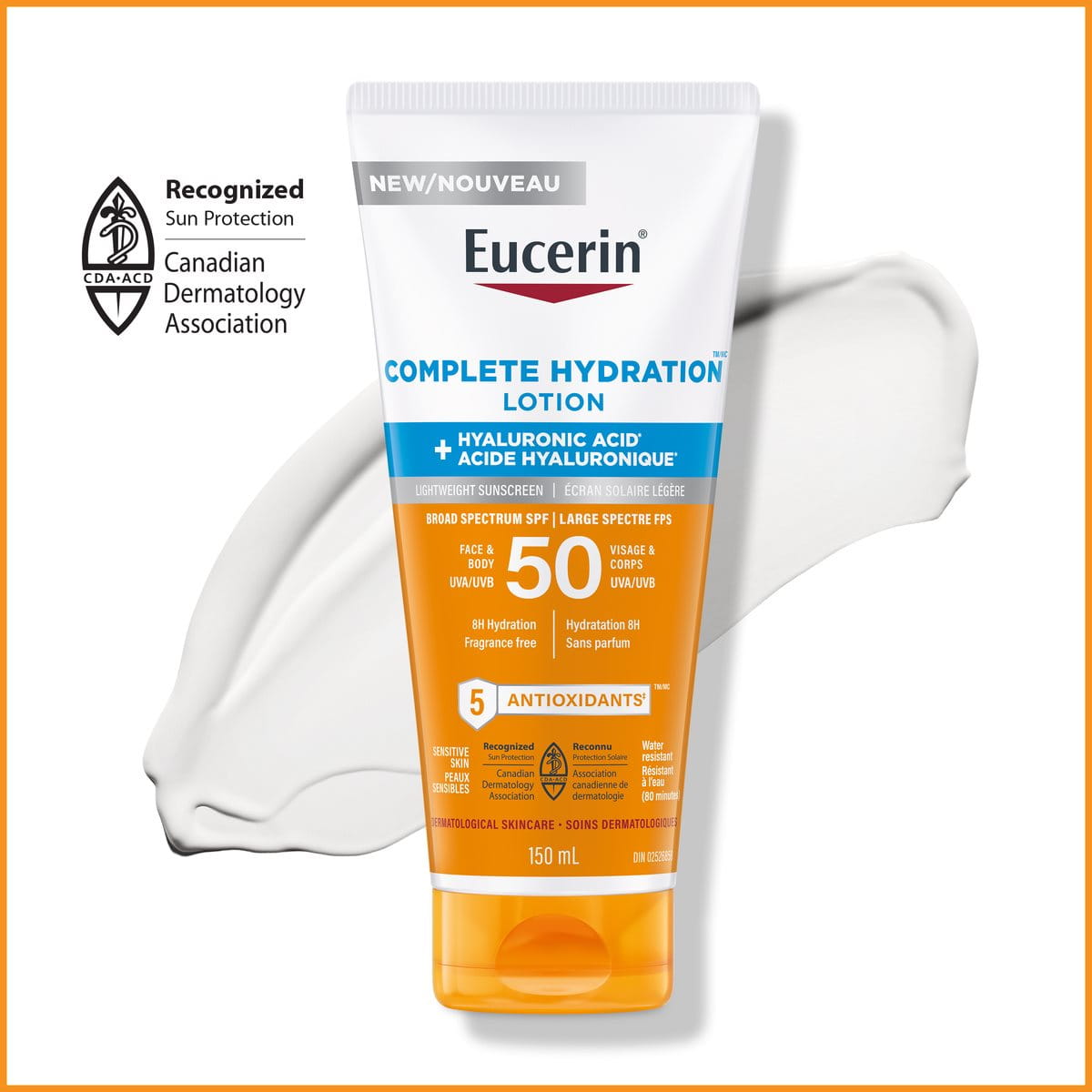
Eucerin® Complete Hydration SPF 50 Face & Body Sunscreen Lotion is a lightweight sunscreen lotion formulated with Hyaluronic Acid and humectants to attract and replenish skin’s natural moisture, for an immediate and long lasting hydrating effect* with a non-sticky feel. This broad-spectrum sunscreen easily rubs into the skin with an invisible finish, is hypoallergenic, and won’t clog pores.
Suitable for sensitive skin and for daily use on both the face and the body, Eucerin® Complete Hydration SPF 50 Face and Body Sunscreen is free of dyes, fragrances, parabens, PABA, phthalates, oxybenzone, and octinoxate. Also available as a convenient SPF 50 sunscreen spray.
*For sun protection, use and reapply as directed.
What does broad spectrum sunscreen mean?
Broad spectrum sunscreen means that sunscreen helps to protect the skin against the sun’s UVA and UVB rays. SPF often refers to protection from UVB rays which are associated with causing a visible sunburn, whereas UVA rays penetrate deeper into the skin and are linked to tanning and sun-induced signs of premature aging (but can also lead to skin cancer). It was once common for sunscreens to only protect against UVB rays, but further research has shown how dangerous UVA rays are6. When choosing a sunscreen, be sure to choose one that specifies broad spectrum coverage.
When do I need to use sunscreen
Dermatologists recommend wearing sunscreen every day throughout the year, even throughout winter or on cloudy days. UV Rays can still reach the skin in colder weather and on overcast days. Apply sunscreen to any exposed areas of skin when spending time outdoors, and incorporate a facial sunscreen into your skincare routine, as your face is exposed to the elements year-round.
How often should you reapply sunscreen?
It’s important to reapply sunscreen, regardless of SPF, at least once every two hours, and more often if swimming or sweating. Always be sure to follow directions for use on the label.
How can I soothe sun-stressed skin?
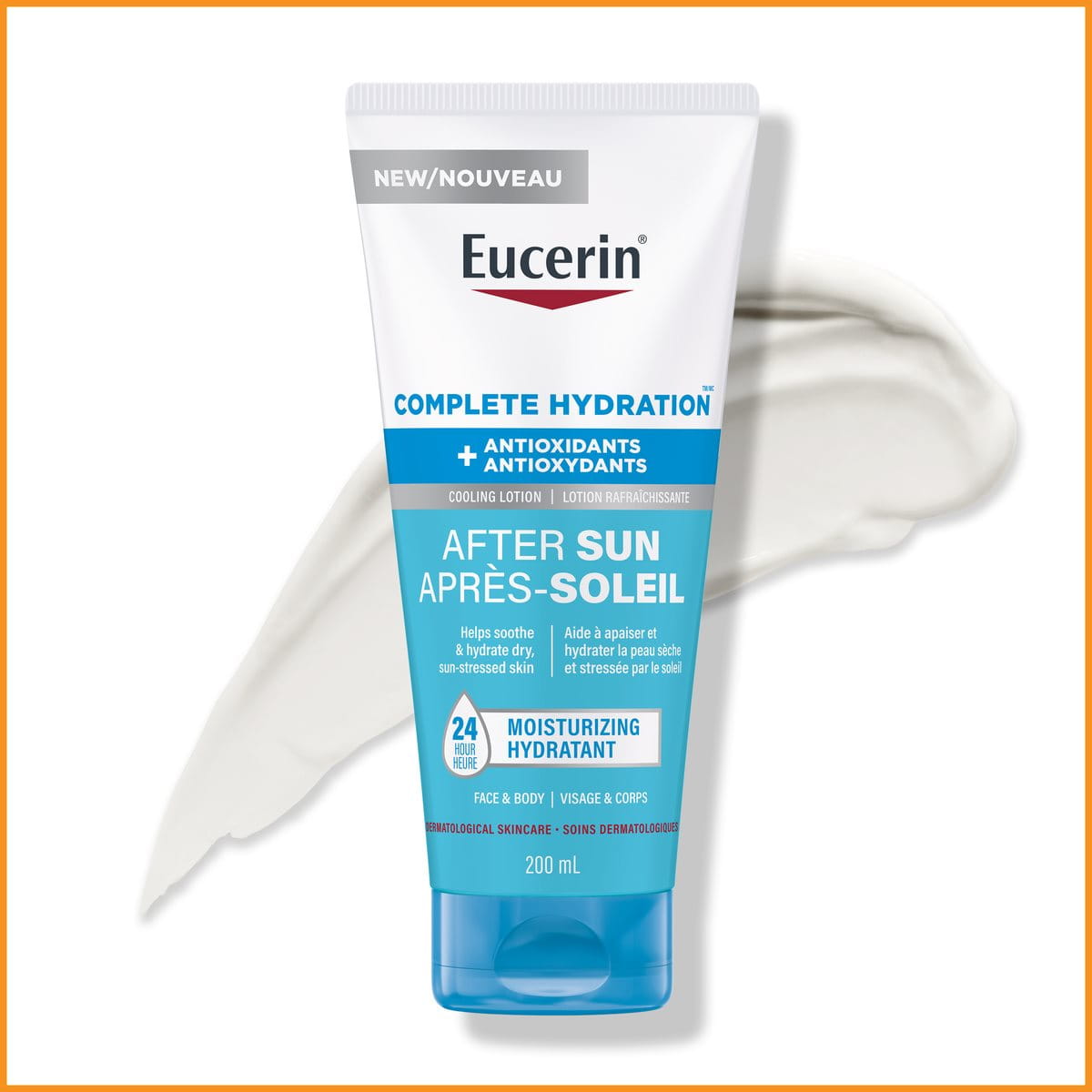
After a day of fun in the sun, it’s important to care for your skin and ensure that you keep skin moisturized. Eucerin® Complete Hydration After Sun Face & Body Lotion instantly hydrates upon application and provides long-lasting moisturization to sun-stressed skin for 24 hours. The ultra-lightweight lotion formula leaves a fresh and cool feeling without being greasy or sticky, and its antioxidant-rich formula goes beyond moisturization to soothe and hydrate sun-stressed skin.
Eucerin Advanced Hydration After Sun Lotion is non-comedogenic (won't clog pores) and is suitable for all skin types including sensitive skin and is also suitable for children. Also hypoallergenic, this face and body lotion for dry skin is free of parabens, dyes and phthalates. To use, smooth this after sun body moisturizer over your skin generously after sun exposure and reapply as needed whenever your skin feels dehydrated for the ultimate after sun skin care routine.
Choose Eucerin Sun for sun protection catered to you
Eucerin® Sun is the only dermatological sun care enriched with 5 antioxidants to help protect against long-term sun damage*. This sun care line’s formula with 5 antioxidants and 3 modes of defense neutralizes free radicals, helps guard against formation of free radicals, and helps protect against natural antioxidant breakdown.
Browse the full collection of Eucerin® Sun products to find the right sunscreen for you.
*Use and reapply with other sun protection measures (see Drug Facts Box).


Citations
- Wilson, B. D.; Moon, S.; Armstrong, F. Comprehensive Review of Ultraviolet Radiation and the Current Status on Sunscreens. J. Clin. Aesthet. Dermatol. 2012, 5 (9), 18–23. https://pmc.ncbi.nlm.nih.gov/articles/PMC3460660/.
- Alexander, H. Should You Use Very High SPF Sunscreen? MD Anderson Cancer Center, May 28, 2021. https://www.mdanderson.org/cancerwise/should-you-use-very-high-spf-sunscreen.h00-159460845.html.
- Canadian Dermatology Association. Sunscreen. Canadian Dermatology Association, updated March 2025. https://dermatology.ca/public-patients/recognized-products/sunscreen/.
- Skin Cancer Foundation. Skin Cancer & Skin of Color. Skin Cancer Foundation, 2023. https://www.skincancer.org/skin-cancer-information/skin-cancer-skin-of-color/.
- Cleveland Clinic. The Difference Between Mineral and Chemical Sunscreens. Cleveland Clinic, May 24, 2024. https://health.clevelandclinic.org/mineral-vs-chemical-sunscreen.
- Alexander, H. What’s the Difference between UVA and UVB Rays? MD Anderson Cancer Center, 2019. https://www.mdanderson.org/cancerwise/whats-the-difference-between-uva-and-uvb-rays.h00-159781179.html.
- Canadian Dermatology Association. Sunscreen. Canadian Dermatology Association, updated March 2025. https://dermatology.ca/public-patients/recognized-products/sunscreen/.
The information provided herein is not intended to be medical advice. Nor is it intended to treat an underlying skin disease or condition. The information is provided for educational purposes only on the benefits of sunscreen usage.